
Sintered Stainless Steel Powder Filters
316L, 310, titanium, nickel and bronze powder elements for high-temperature, corrosive service. Elements are supplied as tubes, discs and plates with ratings from 0.5 μm, for catalyst recovery, steam duty and corrosive gas filtration.
Feature Sintered Stainless Steel Powder Filters
Explore selected sintered metal powder filter products for high-temperature, corrosive, gas, liquid, aeration, and fluidization applications. This section includes sintered 304 and 316 stainless steel powder filters, sintered titanium powder aeration heads, and sintered titanium powder discs. These images show only selected product options. For more sintered metal powder filter designs, pore structures, materials, dimensions, or custom porous metal components, please contact us.
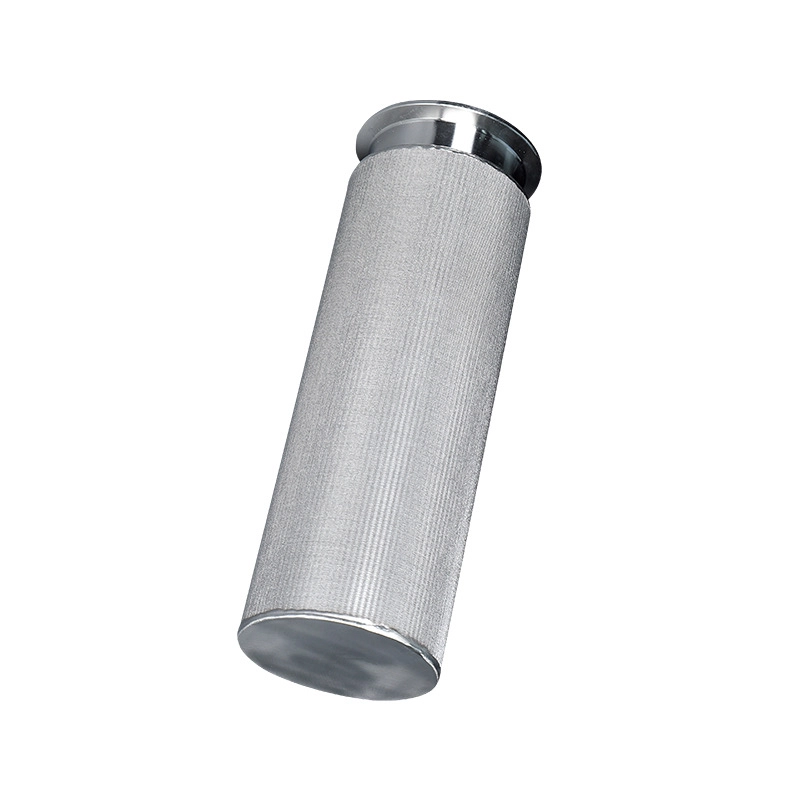
sintered 304 stainless steel powder filter
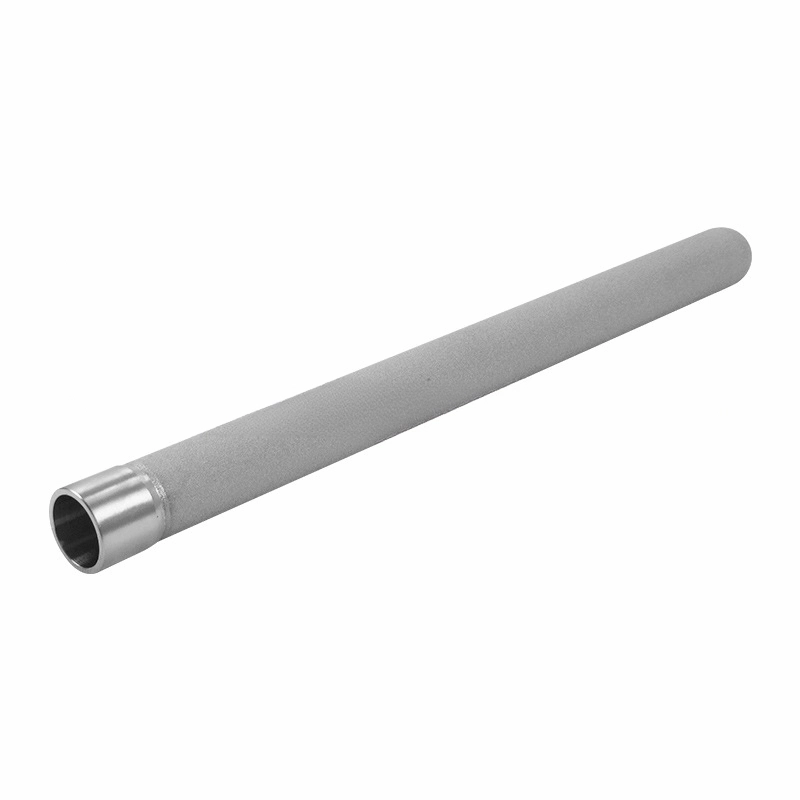
sintered 310 stainless steel powder filter
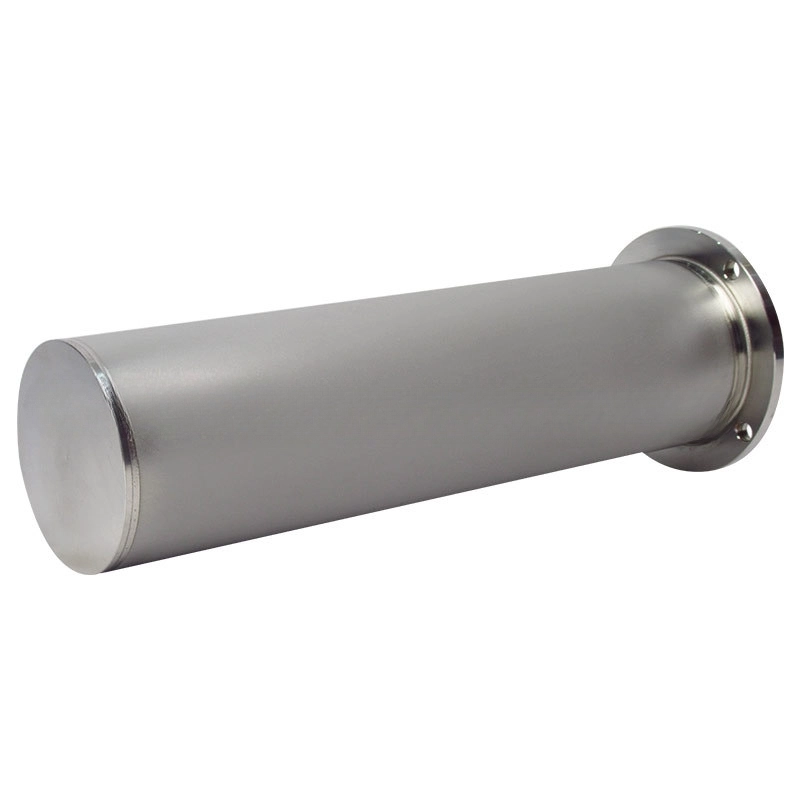
sintered 316 stainless steel powder filter
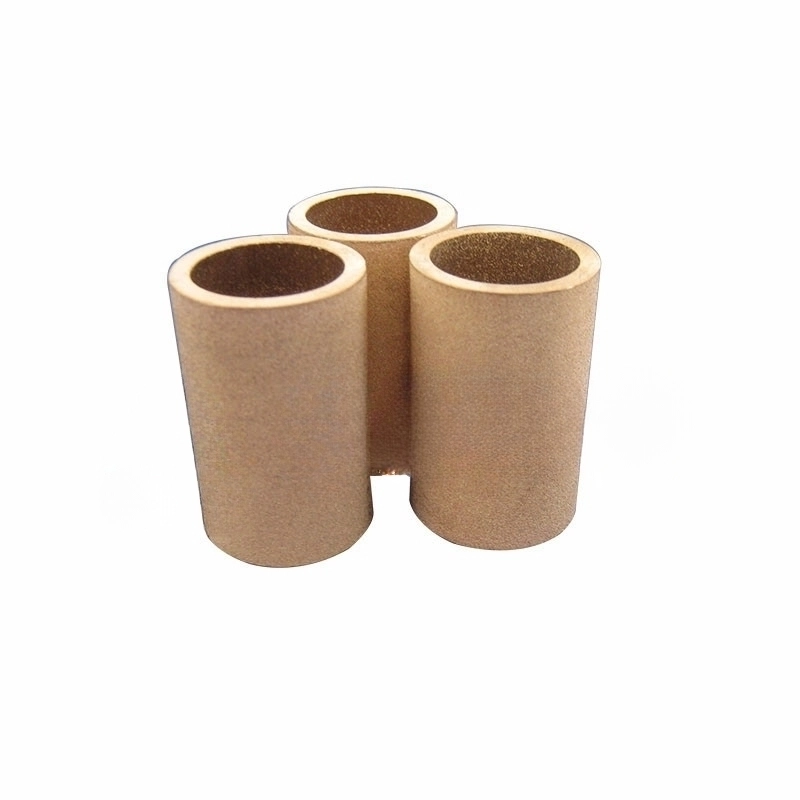
sintered Cu powder filter
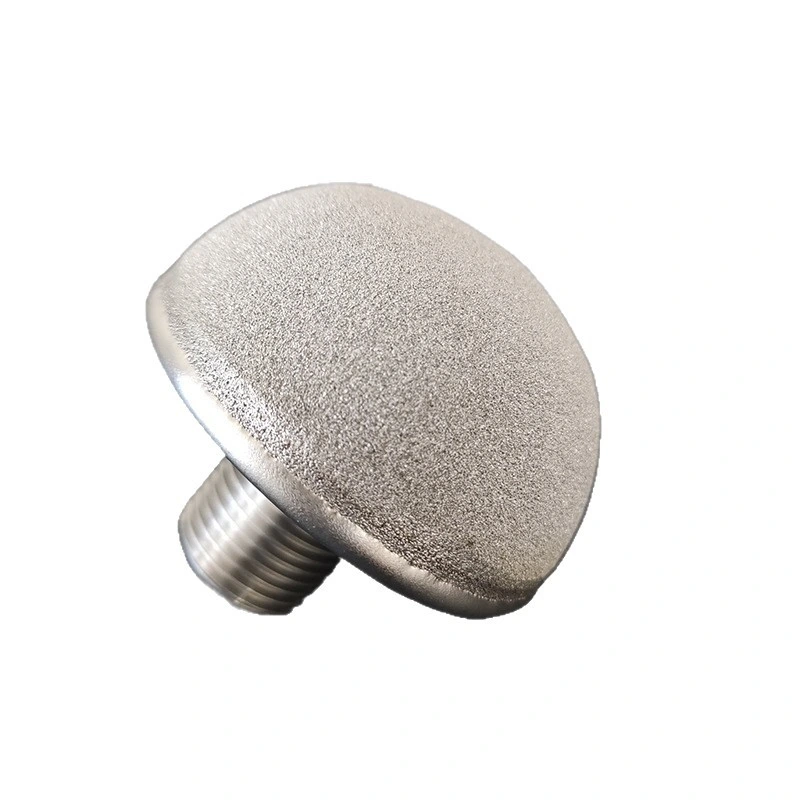
sintered titanium powder aeration head
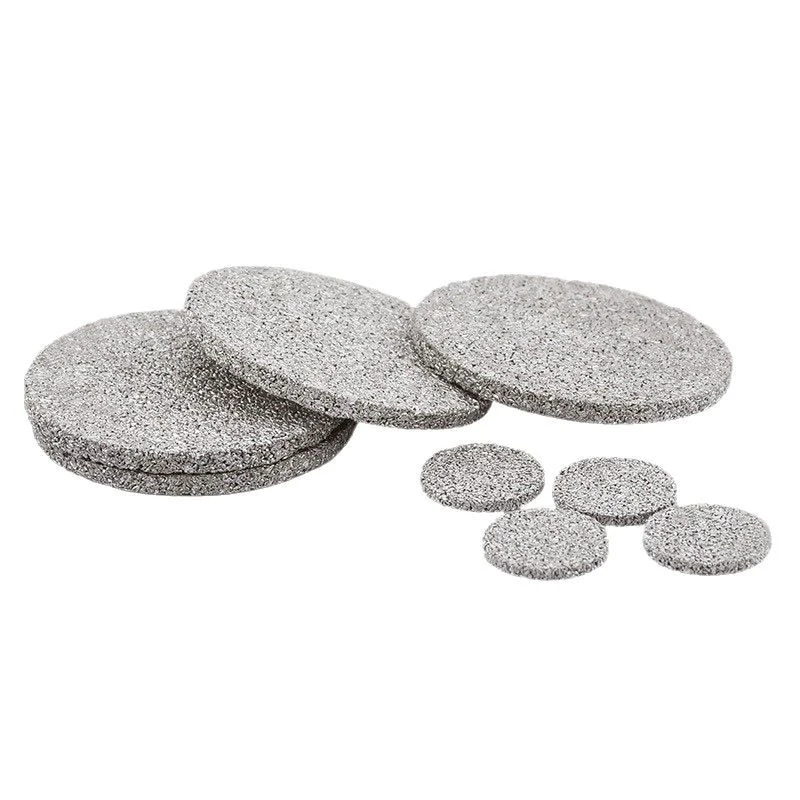
Sintered Titanium Powder Disc
Need a custom sintered metal powder filter?
Send us your drawing or working conditions and receive a technical proposal within 24 hours.
Product Description
Our sintered powder metal filters are supplied using high-temperature sintering of fine metal powders, including 316L stainless steel, 310 stainless steel, titanium, nickel, and bronze. The final filtration rating, nominal pore-size range, porosity, temperature resistance, and chemical compatibility depend on the selected material and powder grade. Powder pore sizes may range from approximately 4 to 160 μm, while the filtration rating must be confirmed for the specific design and application. These filters are suitable for polymer melt, high-temperature gas, corrosive liquid, and other demanding process filtration.
For related filtration solutions, see our Sintered Wire Mesh Filters, Sintered Metal Fiber Felt Filters, and Wedge Wire Screen Filters. For a direct comparison of materials, see our sintered metal powder filter materials guide and stainless steel alloy selection guide.
Explore our main site sections: Home, Products, About, Applications, and OEM Replacement Filters.
Grade Table: Rating, Pore Size and Permeability
Powder-sintered elements are graded by nominal filtration rating. Because pore size and permeability move together, the grade - not only the outside dimensions - decides pressure drop and dirt-holding capacity. The table below is the standard production range; intermediate grades and non-standard wall thicknesses are available on request.
| Nominal rating (um) | Max. pore (um) | Air permeability (m3/h.m2.kPa) | Wall thickness (mm) | Compressive strength (MPa/cm2) |
|---|---|---|---|---|
| 0.5 | 4 | 3 | 0.6 - 10 | 3.0 |
| 1 | 6 | 5 | 0.6 - 10 | 3.0 |
| 2 | 10 | 15 | 0.6 - 10 | 3.0 |
| 5 | 15 | 40 | 0.6 - 10 | 2.5 |
| 10 | 30 | 120 | 0.6 - 10 | 2.5 |
| 20 | 60 | 250 | 0.6 - 10 | 2.5 |
| 30 | 100 | 500 | 0.6 - 10 | 2.5 |
| 50 | 160 | 800 | 0.6 - 10 | 2.5 |
Reading the table: a 1 um element has a maximum pore of about 6 um and only 5 m3/h.m2.kPa of air permeability, so it holds a fine dirt load but produces more pressure drop than a 20 um element at the same flow. Specify the finest rating that still keeps clean differential pressure inside the trip setting of your system.
Field Reference: Refinery Slurry-Oil Polishing
Sintered 316L powder elements are the established media for RFCC slurry-oil polishing. Published pilot work on a fractionation-bottom slurry at 380 C reported ash falling from 2,000-3,000 ug/g to below 100 ug/g, at a removal efficiency above 95% over more than a month of continuous operation. These are publicly reported industry results, quoted to show the duty this media is specified for; they are not a record of our own shipments.
Commercial units in East China run automated dual or triple filter trains of 100-350 t/day on existing RFCC plants. Reported service conditions: slurry around 350 C at 20 bar, catalyst solids from a few hundred up to 12,000 ppm, filtrate below 50 ppm total suspended solids, and a filtration cycle of roughly 30-45 minutes to a terminal differential pressure of 2.5-2.8 bar. Gas backwash recovers the element to within 0.15-0.35 bar of its clean differential pressure - the number to watch, because a recovery point that drifts upward means the cleaning cycle, not the element, needs attention.
What this means for a specification: 1-5 um nominal rating, inside-out flow so the cake forms on the bore where backwash can lift it, and a collapse rating that exceeds the backwash differential rather than only the forward one.
Supply & Ordering
| Quotation | Reviewed and returned within 24 hours, including drawing notes and lead time |
|---|---|
| Trial order | Small trial quantities accepted. Tooling is quoted separately where a new tool is needed, and confirmed before the order is placed |
| Lead time | Standard sizes subject to stock; fully custom items 15-25 days after drawing approval |
| Terms | FOB Tianjin; other Incoterms on request. T/T, L/C at sight |
| Documents | Material certificate, dimensional inspection report and bubble-point test report on request |
| Packing | Individual protection per element, then export wooden case |
| To quote | Send a drawing (DWG/PDF), a photo of the used element, or the OEM part number - we confirm the equivalent |
Not sure which grade fits your duty? Send the working conditions (medium, temperature, pressure, target micron or ISO 4406 class) and we will confirm a suitable rating before you commit to an order.
Related: wire mesh filter elements | 5-layer sintered mesh | specifying powder filters for petrochemical duty
Frequently Asked Questions
What materials are available for sintered metal powder filters?
Common materials include SS316L, titanium, nickel-based alloys, and bronze. SS316L is suitable for general corrosion-resistant applications; titanium offers excellent resistance to strong acids and chlorides; nickel alloys perform well in high-temperature, corrosive environments; bronze is typically used for air, water, and fuel filtration.
How is filtration accuracy defined? Do you provide bubble point testing?
Typical filtration ratings range from 0.1 to 100 μm. We define accuracy based on the absolute filtration rating, supported by bubble point test data to verify that no particles larger than the nominal pore size pass through. Bubble point tests can be arranged for each batch, with reports available upon request.
What are the permeability and pressure drop characteristics?
The uniform porous structure of sintered powder provides stable permeability. Pressure drop increases gradually with flow rate, making these filters suitable for precise liquid filtration, gas distribution, aeration, and fluidization applications. Actual performance depends on pore size, material, and medium viscosity.
Can you manufacture custom shapes and structures?
Yes. Beyond standard filter cartridges, we supply porous plates, tubes, discs, diffusers, spargers, and fluidized bed distributor plates. Dimensions such as outer diameter, length, wall thickness, and pore size can be customized according to technical drawings or samples.