Wedge Wire Screen Filters
High open area, non-clogging V-slots from 20 μm, sized to your application. Screen types include T-type, candle, resin trap, pipeline, basket and blanket filters, in 304, 316L, duplex and nickel alloys, built to your slot size and diameter.
Feature Products
Explore selected wedge wire screen filter products for continuous-slot, low-clogging industrial filtration. This section includes T-type wedge wire filters, wedge wire candle filters, resin trap filters, pipeline filters, basket filters, and blanket filters for water treatment, desalination, food processing, mining, drilling, and other demanding applications. These images show only selected product options. For more custom wedge wire screen filters, slot sizes, materials, dimensions, or application-specific designs, please contact us.
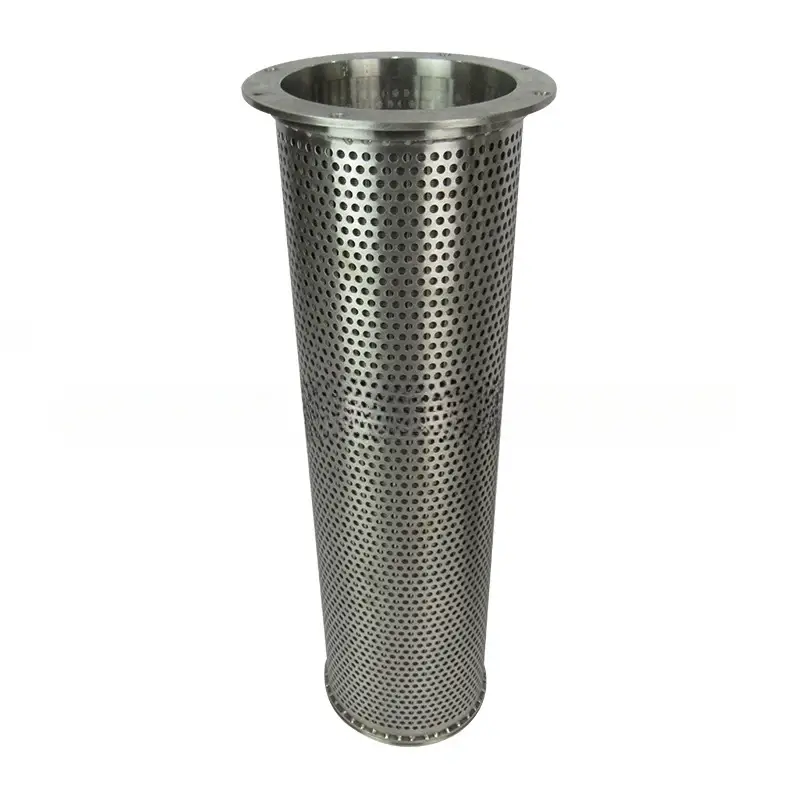
T-Type Wire Screen Filter
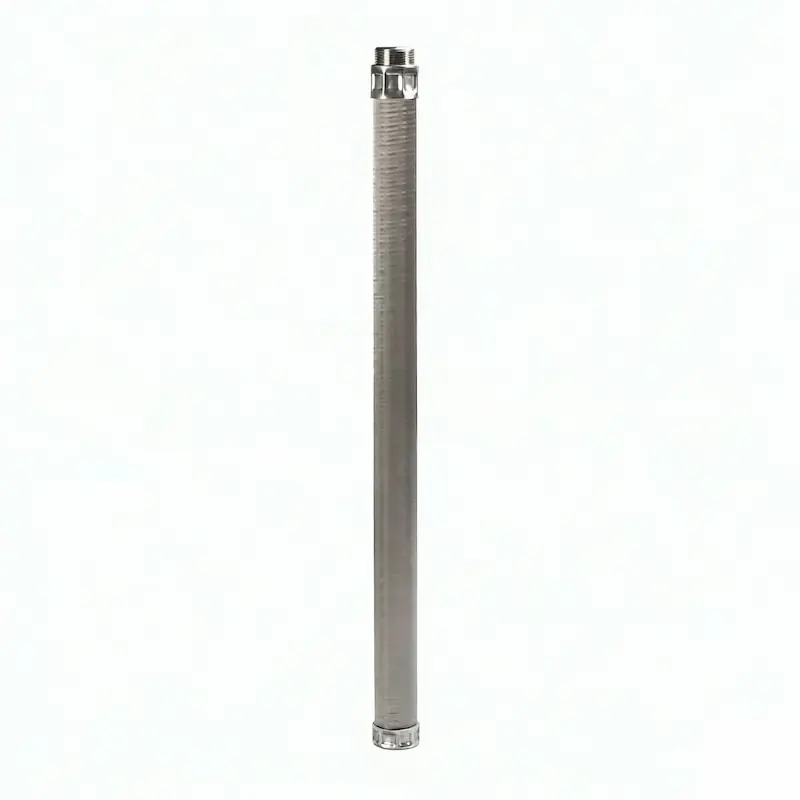
wire screen candle filter
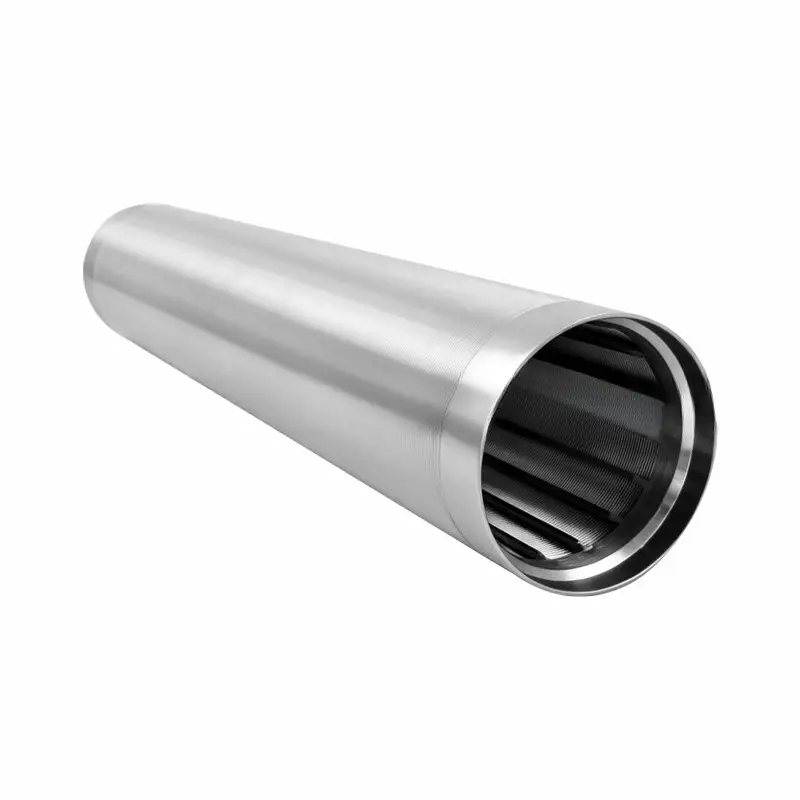
wire screen resin trap filter
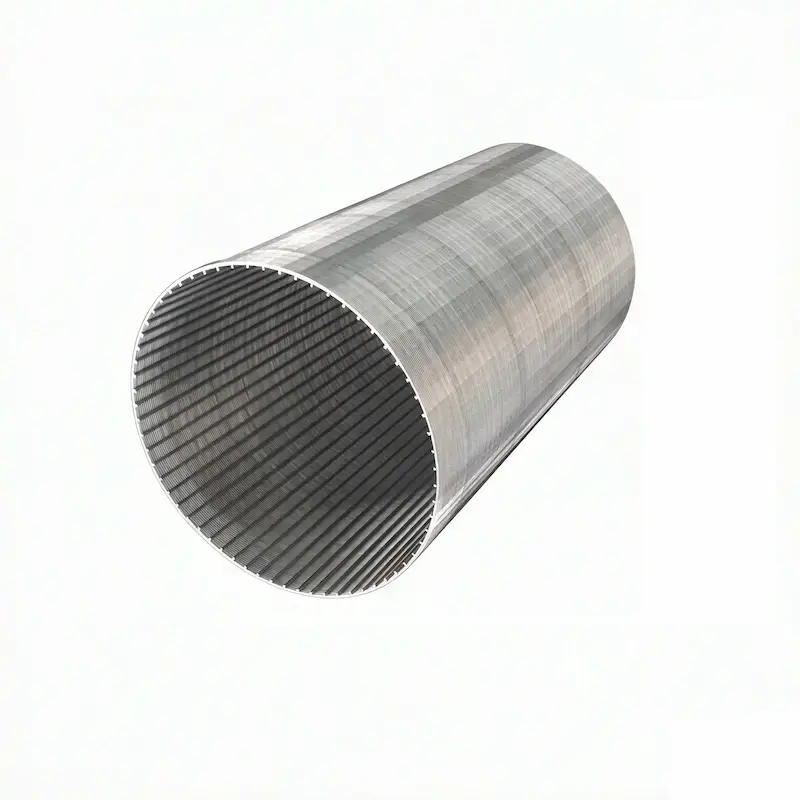
wire screen pipeline filter
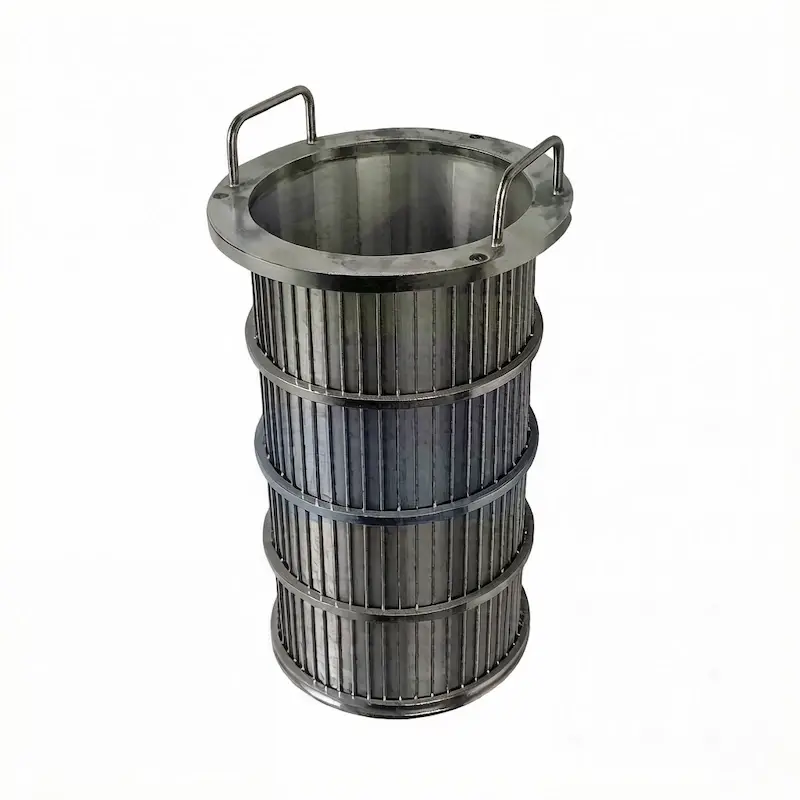
wire screen basket filter
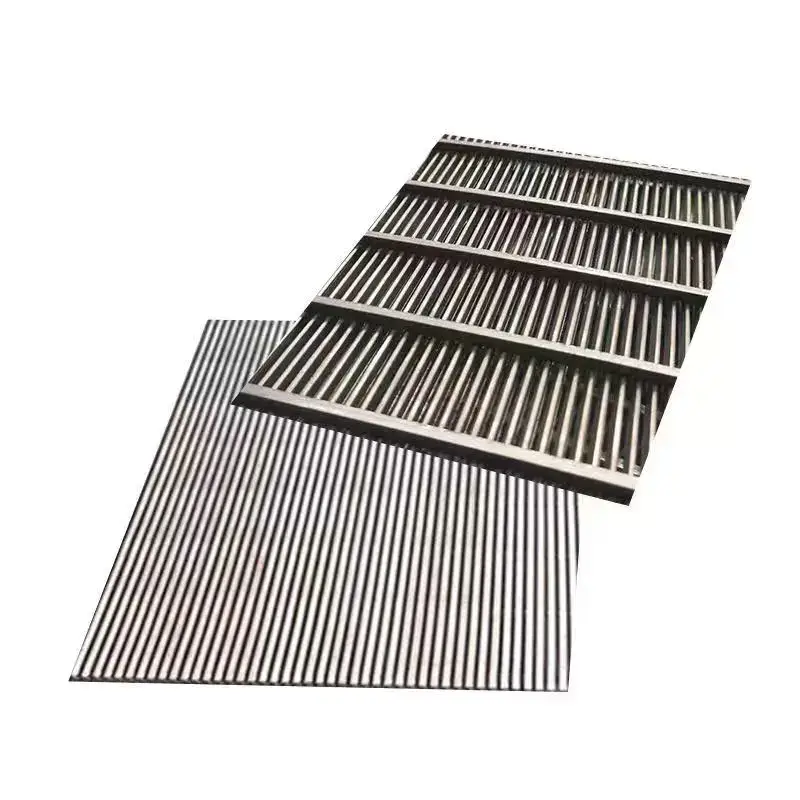
wire screen blanket filter
Need a custom wedge wire screen filter?
Product Description
Wedge wire filters are supplied by continuously winding V-shaped (trapezoidal) profile wire onto support rods and resistance-welding at every contact point. The V-slot geometry minimizes blinding and supports efficient backwashing, with open area typically around 30%–40% for low-pressure-drop, high-flow operation. Stainless steel, duplex, and alloy constructions are available. Slot size, operating temperature, pressure resistance, and corrosion compatibility depend on the selected material and design; typical slot openings start at 20 μm. These screens serve water treatment, desalination, food and beverage filtration, catalyst recovery, mining, and drilling.
For related filtration products, see our Wire Mesh Filter Elements, Sintered Wire Mesh Filters, and Sintered Metal Powder Filters. For material selection guidance, see our stainless steel alloy selection guide.
Explore our main site sections: Home, Products, About, Applications, and OEM Replacement Filters.
Grade Table: Profile Wire, Slot Size and Open Area
Slot opening is set by the gap between adjacent profile wires, but open area - and therefore flow capacity and pressure drop - is set by the wire profile behind it. Two screens with the same 0.5 mm slot can differ by a factor of two in open area.
| Profile wire (mm) | Support rod (mm) | Slot range (mm) | Open area | Typical duty |
|---|---|---|---|---|
| 1.0 x 2.0 | 2.0 - 3.0 | 0.05 - 0.5 | 15 - 25% | Resin traps, fine polishing screens |
| 1.5 x 2.5 | 3.0 | 0.10 - 0.5 | 20 - 30% | Water intake, process liquid screening |
| 2.0 x 3.0 | 3.0 - 4.0 | 0.20 - 1.0 | 25 - 35% | Dewatering, desalination pre-screening |
| 3.0 x 5.0 | 4.0 - 5.0 | 0.50 - 3.0 | 30 - 45% | Coarse screening, waste water |
| 3.5 x 6.5 | 5.0 - 6.0 | 1.00 - 5.0 | 35 - 50% | Mining, coal and mineral dewatering |
Tolerance on slot width is held to +/- 0.02 mm on cylinders and panels for the 0.05 - 0.5 mm range. Because flow direction, feed solids and cleaning method all shift the optimum, the final slot is confirmed against your actual feed rather than a catalogue number alone.
Field Reference: Seawater and River Intake Screening
Wedge wire screens are the reference technology for marine and river intakes, and in several jurisdictions the only open-intake method accepted as best available technology. The design logic is the opposite of a filter: the screen is not meant to capture debris, it is meant to keep debris moving.
Reported installations set the practical envelope. These are publicly reported industry installations, included to show the duty envelope; they are not a reference list of our own shipments. A municipal desalination plant on the US west coast used four copper-nickel screens of 36 in OD x 152 in length with 1 mm slots at 12,000 gpm per pump structure, mounted about 760 m offshore. An industrial mine intake off Peru used two 2507 super duplex cylinders with 3.00 mm slots at 1,834 m3/h, specified for seven years of service with only sacrificial anode replacement. A large European river-estuary plant runs seven 3 mm screens of 3,500 mm length and 1,100 mm diameter, one per intake pump.
Three numbers govern the design. Through-screen velocity is held at or below 0.15 m/s (0.5 ft/s) so that organisms are not pinned to the surface. Ambient cross-flow of at least 0.3 m/s sweeps the face clean. Slot size is chosen against the eggs, larvae and juveniles of the species that must be protected, not against a particle size taken from the process. Air-burst back-flush is standard on all three installations.
Material follows the water rather than the screen: copper-nickel and 2507 super duplex for open seawater, 316L for brackish and river duty, with an epoxy or silicon coating where biofouling dominates.
Supply & Ordering
| Quotation | Reviewed and returned within 24 hours, including drawing notes and lead time |
|---|---|
| Trial order | Small trial quantities accepted. Tooling is quoted separately where a new tool is needed, and confirmed before the order is placed |
| Lead time | Standard sizes subject to stock; fully custom items 15-25 days after drawing approval |
| Terms | FOB Tianjin; other Incoterms on request. T/T, L/C at sight |
| Documents | Material certificate, dimensional inspection report and bubble-point test report on request |
| Packing | Individual protection per element, then export wooden case |
| To quote | Send a drawing (DWG/PDF), a photo of the used element, or the OEM part number - we confirm the equivalent |
Not sure which grade fits your duty? Send the working conditions (medium, temperature, pressure, target micron or ISO 4406 class) and we will confirm a suitable rating before you commit to an order.
Related: wedge wire filter elements explained | filter applications | wire mesh filter elements
Frequently Asked Questions
What slot sizes are available and what tolerances can you hold?
How do you ensure surface smoothness and prevent blinding?
What configurations and connection types do you offer?
We supply wedge wire in various forms, including filter candles (cartridges), screen baskets, flat panels, arc screens, and centrifuge screens. Common connections include flanges, threaded ends, and tri-clamp fittings. Non-standard dimensions and custom drawings are supported.