
Wire mesh filter elements are chosen for one reason that rarely appears on a quotation: the element is cleaned and put back, not thrown away. That single decision changes every other part of the specification. The weave has to survive repeated cleaning without shifting, the collapse rating has to cover a backwash stroke rather than a steady forward pressure, and the housing fit has to be repeatable across every element in the maintenance store. This guide sets out the six checks that decide whether a mesh element pays back its price difference or becomes the reason a hydraulic system is opened twice a year.
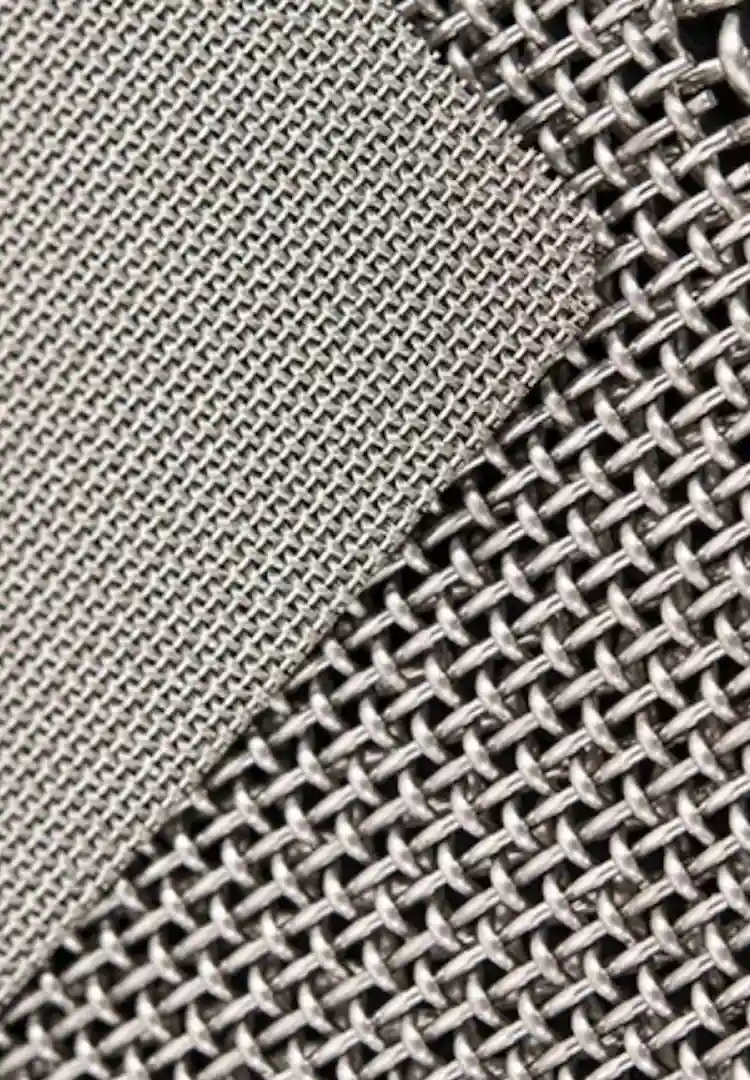
A stainless mesh element is cleaned and returned to service. The weave has to survive that cycle without shifting, which is what separates a reusable element from a consumable one.
The case for a reusable element
On a high-dirt hydraulic or lube loop, a disposable element is consumed at a rate set by the contamination in the oil, not by the calendar. Where the loop is dirty but the oil chemistry is benign, a stainless mesh element is cleaned in place or in a workshop bath and returned to service, and the cost per operating hour falls once the number of cleaning cycles passes a modest threshold. The economics turn on two numbers that are worth measuring before the first order: how much dirt the loop actually produces, and how much workshop time a cleaning cycle costs.
Check 1: choose the weave from the duty, not the mesh count
Mesh count alone does not define a rating, because the wire diameter sets the pore opening. A 200 mesh cloth woven from a heavier wire retains coarser particles than the same count in a finer wire, and a Dutch weave with a lower mesh count retains finer still. What the weave does decide is the balance between permeability, dirt capacity and pressure capability.
| Weave | Mesh count (warp x weft) | Nominal rating (um) | Typical duty |
|---|---|---|---|
| Plain weave | 20 – 635 | 800 – 25 | General liquid and gas filtration, coarse protection |
| Twill weave | 100 – 500 | 150 – 25 | Fine filtration, hydraulic oil, solvent |
| Plain Dutch weave | 24 x 110 – 40 x 200 | 250 – 60 | High pressure, high dirt load |
| Twill Dutch weave | 20 x 250 – 100 x 1200 | 100 – 15 | Fine hydraulic, polymer melt, premium oil |
| Reverse Dutch weave | 72 x 15 – 132 x 17 | 80 – 25 | High viscosity melt, screen changers |
The practical rule is to quote the rating you need and let the weave follow. Dutch weaves give a high collapse strength for their pore size and are the right answer when the housing backwashes; plain weave gives the highest permeability and is the right answer for a suction strainer or a coarse guard filter ahead of a fine element.
Check 2: stage the protection
A single fine element in a dirty loop blinds quickly and forces an early change-out. Two elements in series, a coarse mesh element upstream and a fine element downstream, raise the total dirt-holding capacity of the loop without raising the bypass risk, because the coarse stage removes the load that would have sat on the fine face. The upstream stage is also the one that gets cleaned most often, which is exactly the element worth making reusable.
Check 3: match the flow direction to the element type
A depth element used in the wrong direction does not simply filter less well, it releases the dirt it has already captured into the clean side. Confirm outside-in or inside-out from the housing drawing or from the used element, and confirm it again for the replacement. On a mesh element this is decided by the support structure, so a reversal cannot be corrected by turning the element around at installation.
Check 4: set the collapse rating from the bypass valve
The collapse rating is the differential pressure the element survives before it deforms, and it is routinely confused with the working pressure of the system. These are unrelated. A 21 MPa hydraulic loop can contain an element rated for 1 MPa of collapse, and the element will fold the first time the oil is cold and the pump delivers full flow through a saturated element. Find the cracking pressure of the housing bypass valve and specify the collapse rating above it, with margin for a cold start.
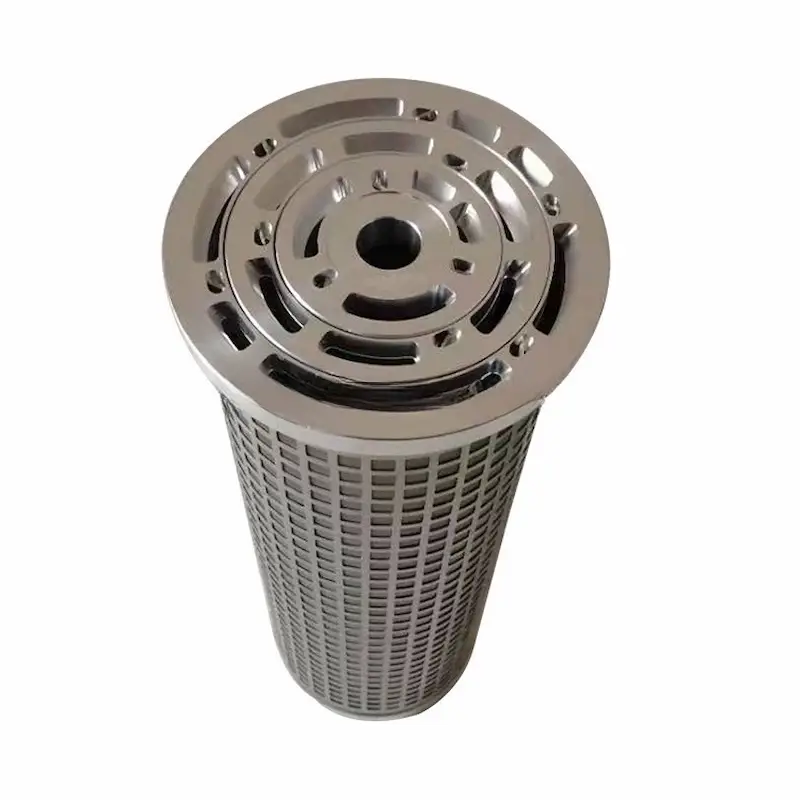
Duplex housings keep the loop running during a changeover. Specify the collapse rating above the cracking pressure of the bypass valve, with margin for a cold start.
Check 5: match the cleaning method to the weave
| Method | Suits | Avoid when |
|---|---|---|
| Reverse-flow backwash | Plain weave and coarse Dutch weaves | The reverse differential is not covered by the collapse rating |
| Ultrasonic cleaning | Fine twill and Dutch weaves, where particles sit inside the pore channels | The bath chemistry attacks the alloy or the end-cap bonding |
| Chemical soak | Varnish, resin and inorganic scale | The reagent is incompatible with the alloy, which is more common than expected |
| Mechanical brushing | Heavy soft cake on coarse plain weave | Fine grades and any Dutch weave, where brushing distorts the warp and raises the pore size |
After cleaning, two checks confirm the element is still fit for service: the clean differential pressure against the value recorded when it was new, and the visual condition of the end caps and the seam. A mesh element rarely fails in the middle of the cloth. It fails at the bond, and a bond failure is visible before it becomes a bypass event.
Check 6: confirm the housing interface before ordering a quantity
Two elements can share the same outer diameter, the same overall length and the same micron rating and still differ in end connection. The common interfaces are double open end, 222 and 226 bayonet, threaded, flanged and tie-rod, and the seal compound is a separate decision again: nitrile, fluorocarbon, EPDM or PTFE, chosen against the fluid and the temperature rather than against availability. Measure the seat on the used element, photograph the housing port, and confirm the seal compound against the fluid. On a repeat order, keep the element drawing with the machine record so the next purchase does not restart the conversation.
Mesh element against sintered mesh and felt
| Medium | Structure | Where it fits |
|---|---|---|
| Wire mesh element | Single or multi-layer woven cloth, cleanable | Coarse to medium duty, strainers, guard filters, staged protection, high flow at moderate differential |
| Five-layer sintered mesh | Diffusion-bonded laminate, rigid | Where the rating must not drift under repeated backwash and the reverse differential is high |
| Sintered metal fiber felt | Depth filtration, 75 to 85 per cent porosity | High viscosity or high temperature service with a large dirt load |
Elements are supplied to the micron rating convention described in ISO 2942 for bubble point testing, and mesh tolerances follow the wire cloth definitions in ISO 9044.
How to enquire
- Element form and dimensions, or the OEM part number and a photograph of the used element.
- Rating. Nominal or absolute, and whether a beta ratio is specified by the machine builder.
- Weave or medium currently in use, if it is known.
- Flow direction, forward and reverse differential, and the bypass cracking pressure.
- Cleaning method and frequency, which sets the weave and the end-cap construction.
With those five items the equivalent can normally be confirmed and a drawing returned for approval the same working day.
Related pages
- Wire mesh filter elements, weave table and ordering information
- Five-layer sintered wire mesh filters, the rigid laminate alternative
- OEM replacement filter elements, cross-referenced by media grade and end connection
- Specifying a hydraulic filter element by beta ratio