
Sintered Stainless Steel Powder Filters
Tanqi Industry supplies high-temperature and corrosion-resistant sintered metal powder filters in 316L stainless steel, 310 stainless steel, titanium, nickel, and bronze. Filtration ratings are customized according to the application and should not be confused with nominal pore-size ranges.
Table of Contents
Feature Sintered Stainless Steel Powder Filters
Explore selected sintered metal powder filter products for high-temperature, corrosive, gas, liquid, aeration, and fluidization applications. This section includes sintered 304 and 316 stainless steel powder filters, sintered titanium powder aeration heads, and sintered titanium powder discs. These images show only selected product options. For more sintered metal powder filter designs, pore structures, materials, dimensions, or custom porous metal components, please contact us.
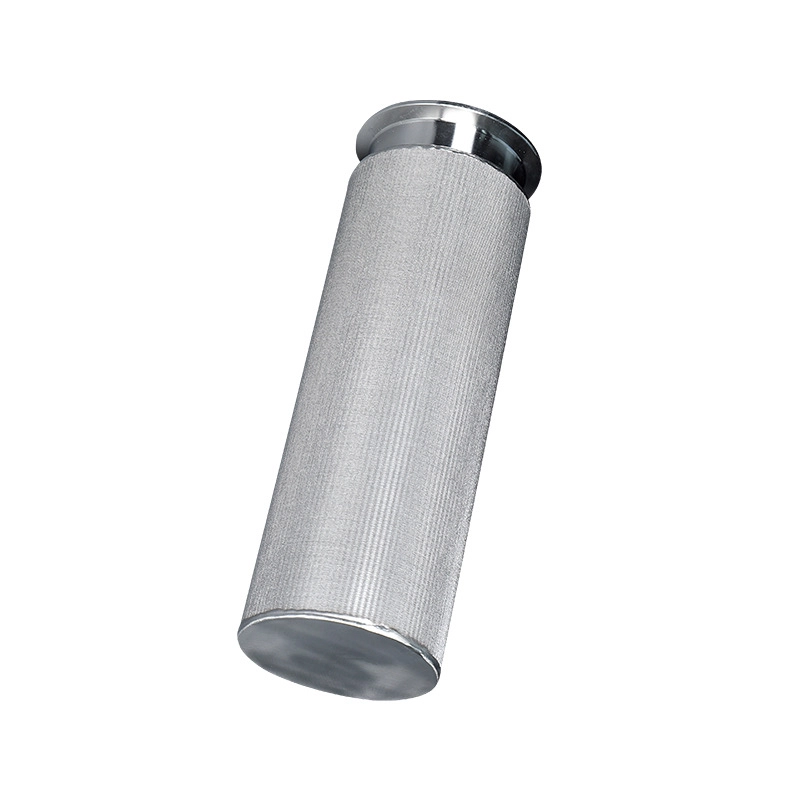
sintered 304 stainless steel powder filter
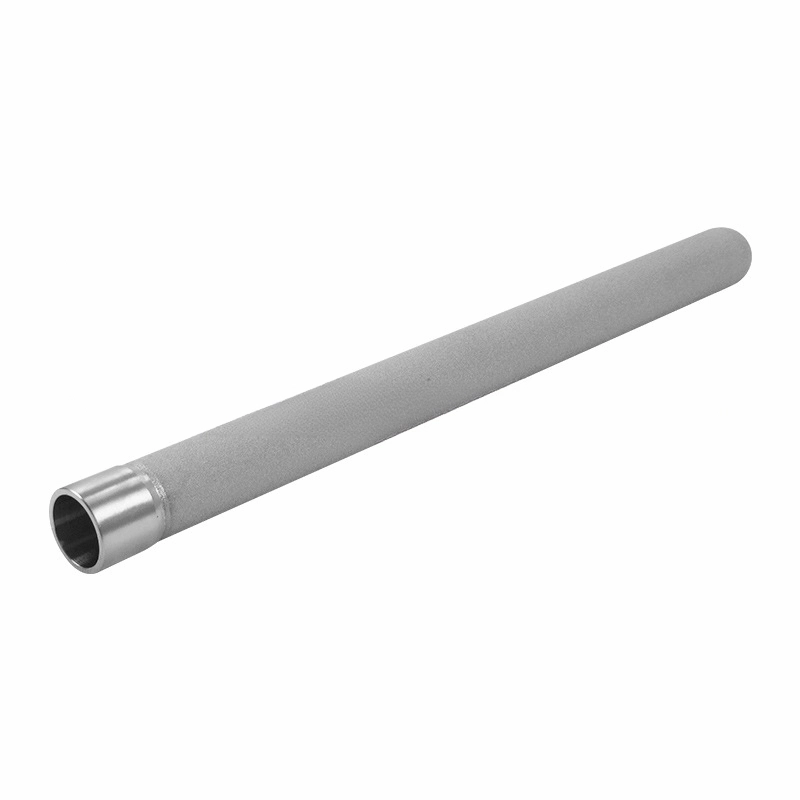
sintered 310 stainless steel powder filter
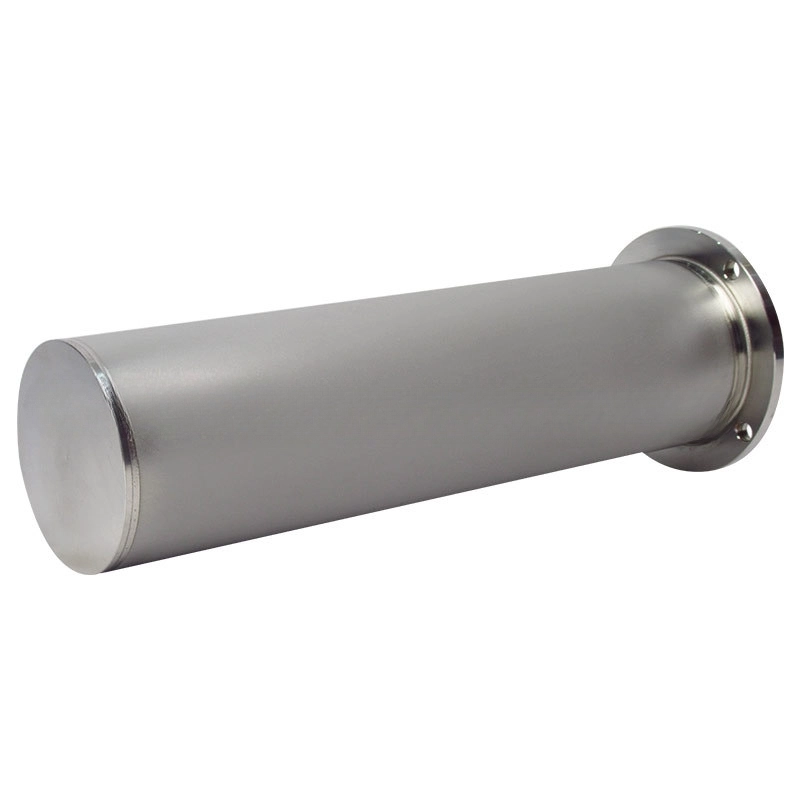
sintered 316 stainless steel powder filter
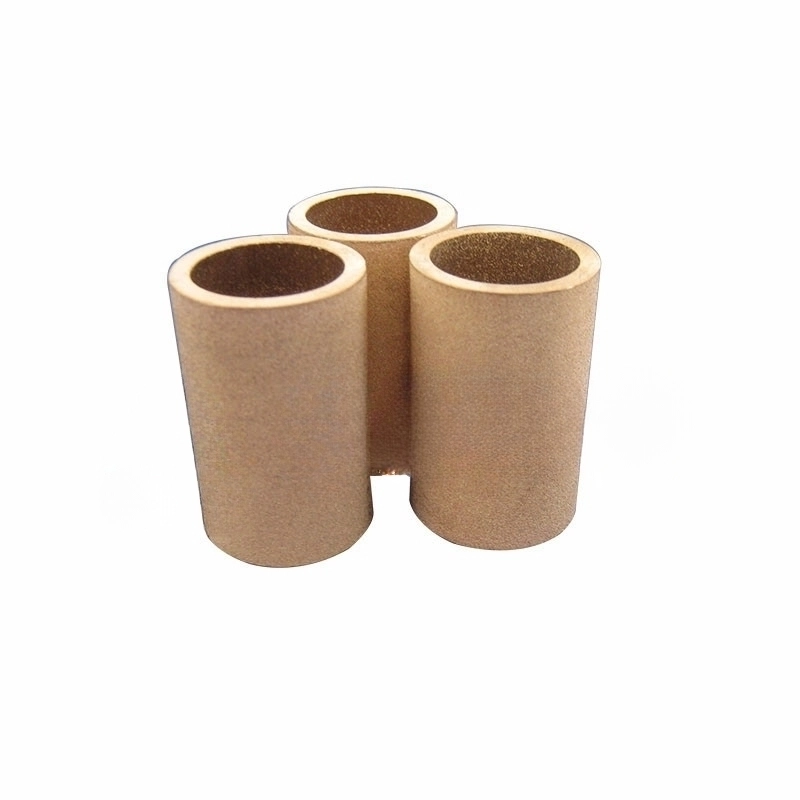
sintered Cu powder filter
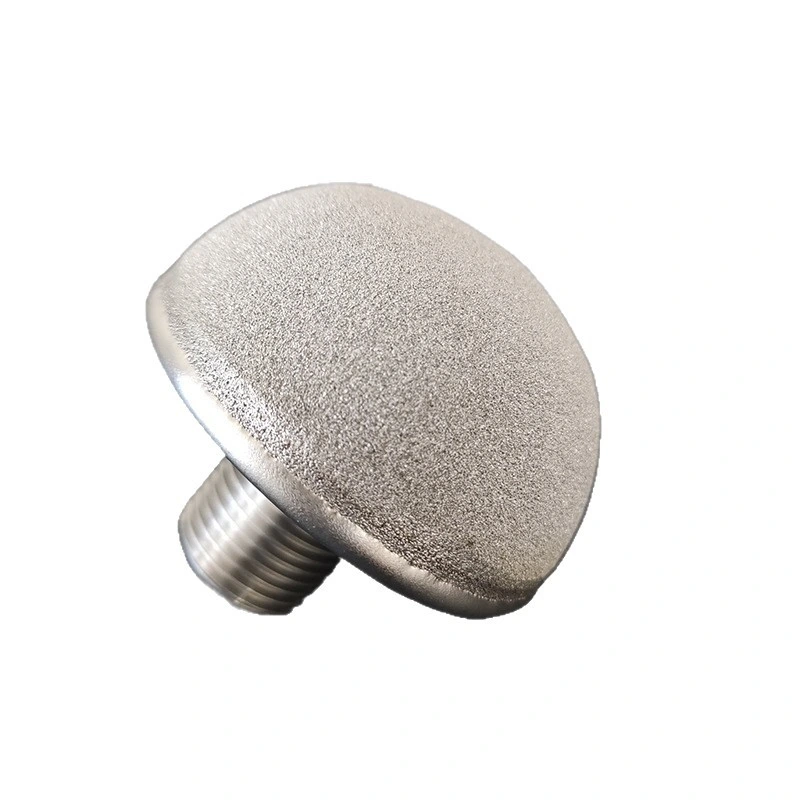
sintered titanium powder aeration head
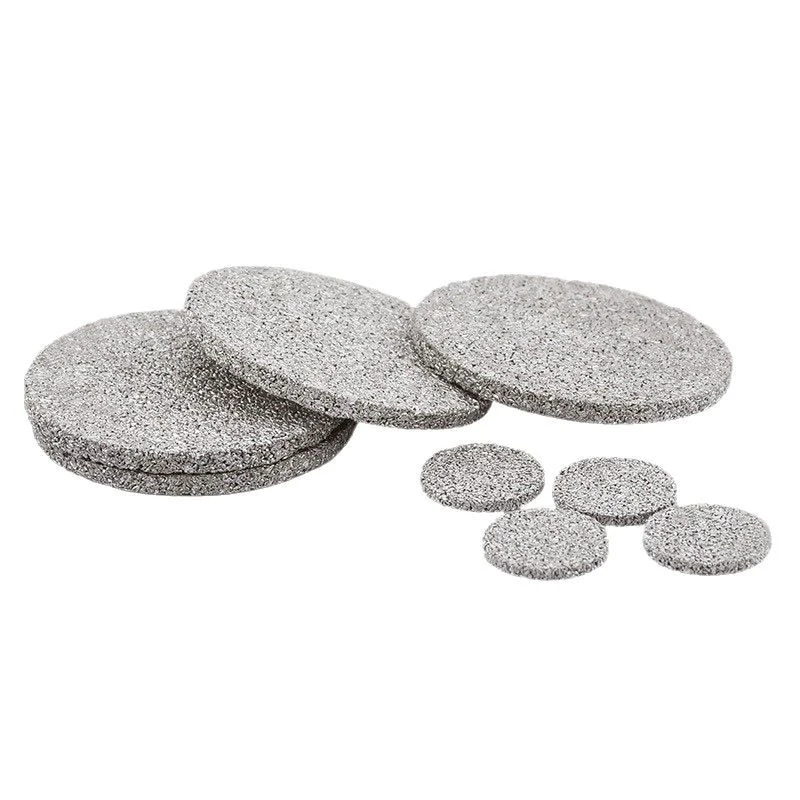
Sintered Titanium Powder Disc
Need a custom sintered metal powder filter?
Send us your drawing or working conditions and receive a technical proposal within 24 hours.
Product Description
Our sintered powder metal filters are supplied using high-temperature sintering of fine metal powders, including 316L stainless steel, 310 stainless steel, titanium, nickel, and bronze. The final filtration rating, nominal pore-size range, porosity, temperature resistance, and chemical compatibility depend on the selected material and powder grade. Powder pore sizes may range from approximately 4 to 160 μm, while the filtration rating must be confirmed for the specific design and application. These filters are suitable for polymer melt, high-temperature gas, corrosive liquid, and other demanding process filtration.
For related filtration solutions, see our Sintered Wire Mesh Filters, Sintered Metal Fiber Felt Filters, and Wedge Wire Screen Filters. For a direct comparison of materials, see our sintered metal powder filter materials guide and stainless steel alloy selection guide.
Explore our main site sections: Home, Products, About, Applications, and OEM Replacement Filters.
Technical Specifications
1. What materials are available for sintered metal powder filters?
Our sintered metal powder filters are available in 316L stainless steel, 310 stainless steel, titanium, nickel, and bronze powder.
2. What filtration accuracy can sintered metal powder filters achieve?
They are available from 0.1 μm to 100 μm filtration accuracy.
3. What pore size and porosity are available?
The pore size ranges from 4 μm to 160 μm, with porosity from 28% to 50%.
4. What temperature and pressure can they withstand?
Depending on the material and design, operating temperature is up to 550°C and maximum pressure ranges from 0.1 MPa to 30 MPa.
5. What media are compatible with these filters?
They are compatible with acids, alkalis, and high-temperature gases.
6. Can the connections and design be customized?
Yes. Connections can include bayonet (226, 222, DOE, etc.), threaded, flange, tie-rod, and custom interfaces. The filter design can be fully customized according to drawings and working conditions.
| Material | Stainless steel, titanium, nickel, copper powder |
|---|---|
| Filtration Accuracy | 0.1 – 100 μm |
| Pore Size | 4 – 160 μm |
| Porosity | 28% – 50% |
| Operating Temperature | Up to 550°C |
| Max Pressure | 0.1 – 30 MPa |
| Media Compatibility | Acids, alkalis, high-temperature gases |
| Connections | Bayonet (226, 222, DOE, etc.), threaded, flange, tie-rod, custom interfaces |
| Customization | Fully customizable; provide drawings and working conditions for tailored solutions |
Frequently Asked Questions
Q1: What materials are available for sintered metal powder filters?
Common materials include SS316L, titanium, nickel-based alloys, and bronze. SS316L is suitable for general corrosion-resistant applications; titanium offers excellent resistance to strong acids and chlorides; nickel alloys perform well in high-temperature, corrosive environments; bronze is typically used for air, water, and fuel filtration.
Q2: How is filtration accuracy defined? Do you provide bubble point testing?
Typical filtration ratings range from 0.1 to 100 μm. We define accuracy based on the absolute filtration rating, supported by bubble point test data to verify that no particles larger than the nominal pore size pass through. Bubble point tests can be arranged for each batch, with reports available upon request.
Q3: What are the permeability and pressure drop characteristics?
The uniform porous structure of sintered powder provides stable permeability. Pressure drop increases gradually with flow rate, making these filters suitable for precise liquid filtration, gas distribution, aeration, and fluidization applications. Actual performance depends on pore size, material, and medium viscosity.
Q4: Can you manufacture custom shapes and structures?
Yes. Beyond standard filter cartridges, we supply porous plates, tubes, discs, diffusers, spargers, and fluidized bed distributor plates. Dimensions such as outer diameter, length, wall thickness, and pore size can be customized according to technical drawings or samples.
Need the Right Filter for Your Project? Let’s Talk.
Standards & Further Reading
The test methods quoted on this page are defined by the following international standards: